The “So What” in Marketing

Introduction
One of the most important questions I ask every day in marketing is, “So What?” Customers are flooded with ads, emails, videos, and social posts competing for their attention.
Take your phone out. Go to your Email. How many advertisements or promotional emails have you received in the last hour alone? I guarantee you are tempted to hit the spam or unsubscribe button, because it simply becomes too much.
The same is true for your customers; if your message does not immediately explain why it matters to your customer, it will be ignored. Strong marketing is not about saying more; it is about making relevance instantly clear. The brands that win understand this concept. They have learned how to connect their message to real problems. Desired outcomes and meaningful value.
In this article, we will explore why the “So What?” question should be at the center of every marketing strategy.
Why Should Your Audience Care?
When is the last time you saw an advertisement, a social post, a TikTok, or even a commercial on TV ( yes, that is still advertising), and thought to yourself, “Why in the world do I care about this?”
If you have ever experienced this with a brand or an influencer, chances are they missed the mark on their message and possibly did one of two things.
Made the entire commercial about THEM, and THEIR product.
The message was shown to the wrong person or audience, at the wrong time.
If your marketing attempts, campaign, content, etc., do not clearly answer the question, “ Why Should Your Audience Care?” , nothing else truly matters. Most marketing fails because it assumes interest instead of earning it.
Customers are always asking this, what does this mean for me? Meaning what would happen if I use this service or product? Does this apply to me?
Relevance comes from connection to a real problem or priority. Attention is earned by addressing pain, risk, opportunity, or urgency.
If the value is not obvious, the message is ignored. Caring begins when the customer can see themselves in the story.
Are You Articulating the “So What” Clearly?
Simply knowing your value is not enough. You have to communicate it simply. Clarity is about being understood, not sounding impressive.
If it takes multiple explanations, the message is not clear yet. The “So What” should be obvious within seconds, not paragraphs.
Remember, your customers want to feel like they get it, not like they are being lectured or get bored with your message before the intended point is made.
Trends fade quickly, so maintaining simple language will go a long way further than cleverness.
Cause and effect is the best way to articulate a strong message, because it builds the story but makes the point that this is the result that they can expect.
Remove as much confusion as possible.
Does Everything Align?
Clarity is the foundation of what we are building on Christen Jones & Co. It breaks down when the message, actions, and priorities don’t match. Messaging should always align with business goals, not just campaigns. Each channel should reinforce the same core idea. Any visuals, copy, and offers should point to one outcome. Internal misalignment shows up immediately in external communication.
One example of the result of internal misalignment is one that I’ve had personal experience with. As a company evolves and begins to expand its product offering. This can alter the warranty and service agreement. If the message is not crystal clear across the entire business, mixed messages can be given to customers. And if that happens and they purchase a product with the impression that a warranty is longer than it currently is, and it has not been updated on every visible piece of communication, the company has to honor that agreement.
Alignment is not saying “yes” to everything and everyone dilutes the “so what”. It takes the personal experience out of it, and it makes the customer feel like another number.
Alignment can turn marketing from noise into momentum.
Are You Focused On Outcomes or Features?
The truth is that customers do not care what it is until they know what it does for them. Think back to a time when we had nothing but infomercials as a way of marketing a product to the masses. Those commercials were, in some ways, entertaining but also inspiring to act. One reason is that they never had a mono-tone speaker sitting at a desk just showing you the product. In fact, they always had someone demonstrating the use of the product in real time with “genuine” expressions of happiness on the faces of the people using it. Giving you the impression that they were truly satisfied with the result of the product.
This same idea of marketing is relevant on a modern scale. Back then, you were able to demonstrate why it mattered and what someone could gain from using the product. Outcomes connect directly to the customer's goals or fears. Customers buy progress, relief, confidence, or results— not tools, bells, and whistles.
Use the “Sell Me this pencil” common activity. You didn't purchase a pencil because it has a sharp point, and it's your favorite shade of yellow. Chances are, you had a problem with writing with a pen, you were frustrated with scratching things out, or using WhiteOut every time you made a mistake. Your desk had nothing else to use. So you saw an advertisement for a Pencil. No more scribbles on your paper or awkward White stips where words used to be. You could see some true relief in getting your work done because the advertisement showed you that you could easily erase your mistakes and keep going.
Feature-heavy messaging assumes too much knowledge. Outcome-driven marketing lowers cognitive effort for the audience. Clear outcomes help customers self-select more quickly. That’s what you want, to be the easy choice.
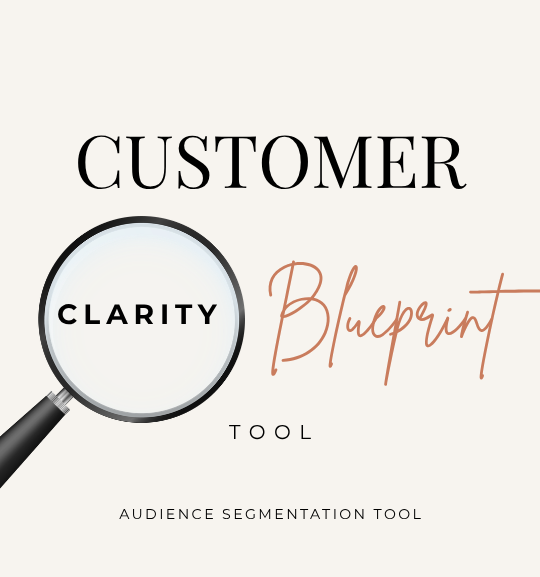
If you are struggling with breaking down who your true audience is. I recommend checking out my Customer Clarity Blueprint Tool. This will help you break down all of the details you need to truly understand who your real audience is. You can download your copy below
Customer Clarity Blueprint
The Customer Clarity Blueprint was designed to help entrepreneurs, creators, and service providers clearly define who they serve, what their audience truly needs, and how to create messaging that feels human, strategic, and effective.
This guided digital workbook combines teaching, prompts, note-taking space, and actionable exercises to help you build a stronger understanding of your customer from the inside out. Inside the Blueprint, you’ll work through:
Ideal customer identification
Pain points and emotional triggers
Buying motivations and decision-making
Customer psychology and behavior
Customer Clarity Snapshot worksheet
This resource is designed to help you:
✔ Create more effective content
✔ Improve your messaging
✔ Build stronger customer trust
✔ Stop posting random content
✔ Understand what your audience actually needs
✔ Market with more confidence and clarity
What’s Included:
• Digital slide workbook
• Guided prompts and exercises
• Final Customer Clarity Snapshot page
• Instant digital download
Make the “So What” a Discipline
One mistake I notice with professionals and new businesses is that they just apply the “So What” ideology and practice one time, and that's it. The strongest brands are constantly asking the question. As technology evolves, the world changes, and the expectations of customers change; your mind has to always be on a swivel.
Ask that “So what?” question at EVERY STAGE of planning and execution, even throughout the customer journey. Pressure test messages with people outside your team. Remove anything that does not reinforce the core takeaway.
To make this easier to apply, I’ve created a free “So What” checklist you can use again and again.
Revisit the question as markets, customers, and priorities evolve. Treat clarity as a strategic skill, not a creative afterthought. Consistent relevance builds trust over time.
Conclusion
The “So What?” in marketing is really removing yourself from the center of the campaign, and replacing it with empathy, clarity, and discipline. It forces brands to move beyond talking about themselves and focus on what truly matters to the customer. When your messaging highlights outcomes over features, aligns across every touchpoint, and consistently proves relevance, marketing becomes more effective and more trusted.The strongest brands are not the loudest, they are clear. If your audience instantly understand why they should care, you are already ahead of most of the market.
If you enjoyed this article and want more practical insights on marketing strategy, career growth, and building smarter brands, subscribe to The Growth Brief. You’ll get access to fresh articles, strategic resources, downloadable guides, and upcoming courses designed to help you market with more confidence and less guesswork. Join the community and keep growing with us.
